
Why Streaming TV Matters for Christian Creators and Ministries
Jun 08, 2026
For years, many Christian creators and ministries focused primarily on social media.
They posted clips.
They went live.
They shared podcast episodes.
They promoted events.
They created reels and short videos.
They used Facebook, Instagram, YouTube, LinkedIn, and other platforms to reach people.
That work still matters.
But the media landscape has changed.
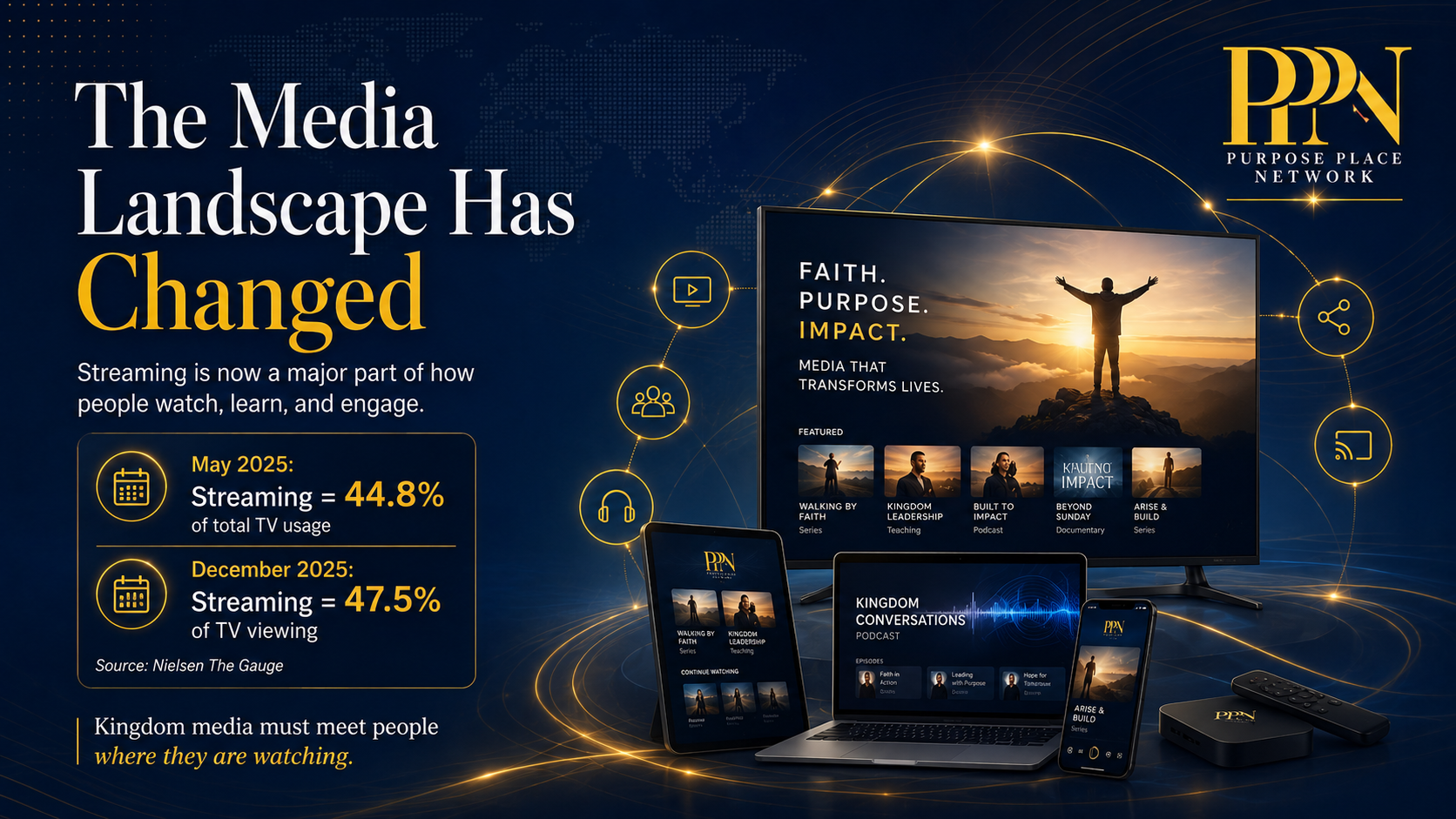
People are no longer consuming content in only one place. They are watching on phones, tablets, laptops, smart TVs, streaming devices, apps, and on-demand platforms. Streaming has become one of the major ways people experience video content, teaching, interviews, entertainment, education, and long-form conversations.
According to Nielsen’s The Gauge report, streaming reached a major milestone in May 2025 when it represented 44.8% of total television usage and outpaced broadcast and cable combined for the first time. By December 2025, Nielsen reported that streaming captured 47.5% of television viewing, the largest share ever reported in The Gauge at that time.
This shift creates a major opportunity for ministries, Christian entrepreneurs, podcast hosts, speakers, authors, coaches, and faith-based content creators.
Streaming TV is no longer reserved only for major studios.
It is becoming part of the future of Kingdom media.
The Media Landscape Has Changed
Christian creators cannot afford to think about media the same way they did ten years ago.
A person may first discover your message through a short video clip. Then they may visit your website, listen to your podcast, watch a full episode, join your email list, attend a virtual event, register for a class, or watch your program on a streaming platform.
That means your content should not live in disconnected pieces.
Your social media, podcast, website, email list, livestreams, blog articles, and streaming TV content should work together as part of one clear media strategy.
The goal is not simply to be visible.
The goal is to be trusted.
The goal is to create a pathway where people can discover your message, understand your voice, receive your teaching, grow through your content, and stay connected over time.
For Kingdom creators, this matters deeply because your media is not just marketing.
It is stewardship.
Streaming TV Gives Your Message Room to Breathe
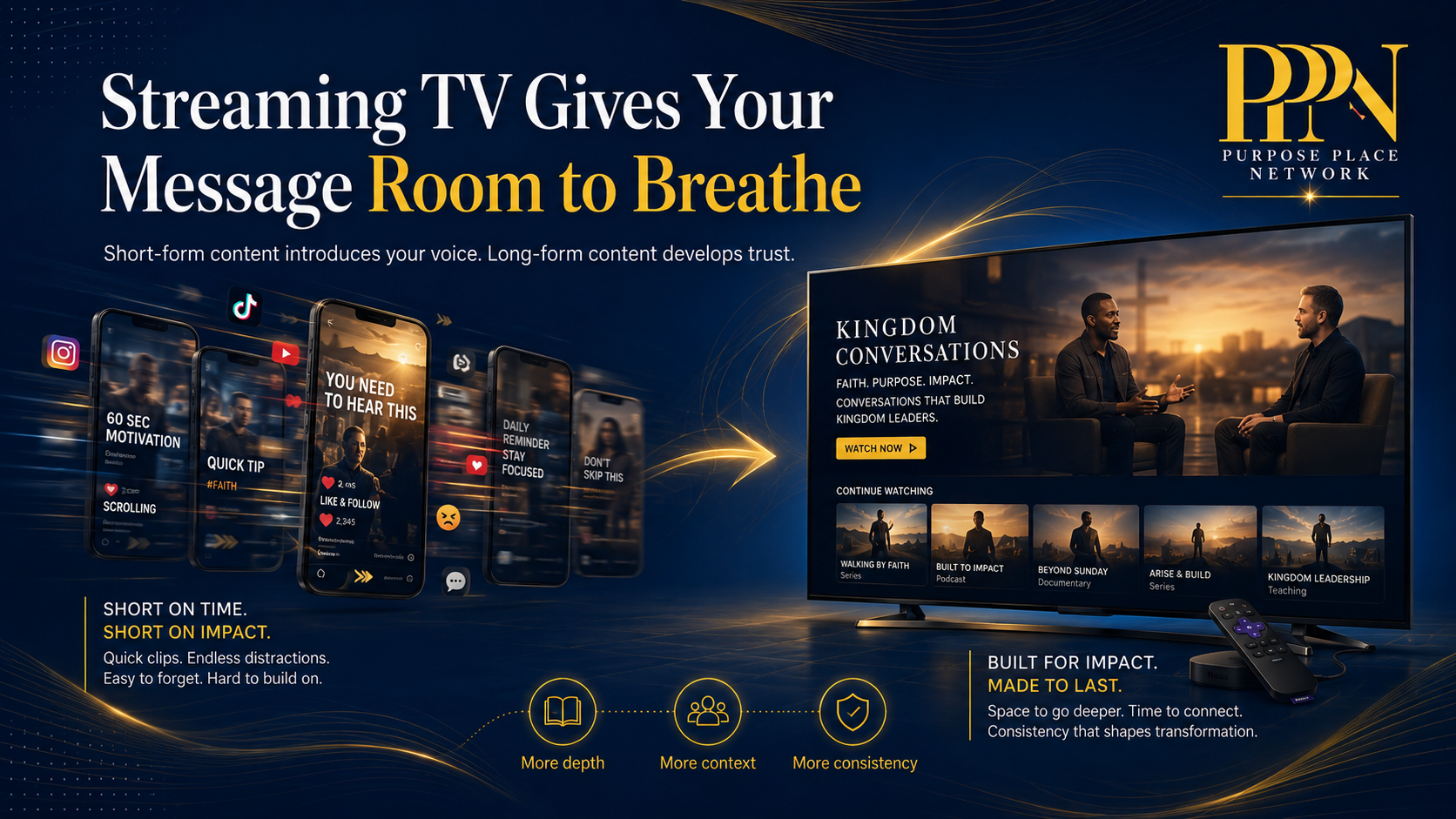
Social media is often fast, crowded, and distracted.
People scroll quickly.
They watch a few seconds.
They move to the next post.
They may enjoy your content but never return to it.
Streaming TV creates a different viewing experience.
It gives your message room to breathe.
A teaching series, interview show, ministry broadcast, documentary-style episode, podcast video, leadership conversation, or faith-based program can be watched in a more intentional environment.
Instead of competing only inside a social media feed, your content can become part of a larger viewing experience.
That matters because some messages need more than 30 seconds.
Some teachings need time.
Some testimonies need depth.
Some conversations need context.
Some ministries need a platform that can hold the weight of their assignment.
Short-form content can introduce your voice, but long-form content often develops trust.
Streaming TV gives Christian creators and ministries a stronger way to present their message with structure, depth, and consistency.
Christian Creators Need More Than Short-Form Clips
Short-form content is powerful for discovery, but it should not be the only expression of your voice.
A clip can introduce your message.
A full episode can develop it.
A series can deepen it.
A platform can organize it.
A network can distribute it.
This is where many Christian creators need to mature in their media strategy.
The goal is not to stop creating social media content. The goal is to understand its role.
Social media can help people discover you.
Streaming TV can help people sit with your message.
Podcasting can help people learn from you consistently.
Your website can help people understand your brand.
Your blog can make your teaching searchable.
Your email list can help you nurture the relationship.
Your offers, applications, products, or services can help people take the next step.
These pieces should not work against each other.
They should work together.
When your media is connected, your message becomes easier to find, easier to understand, and easier to trust.
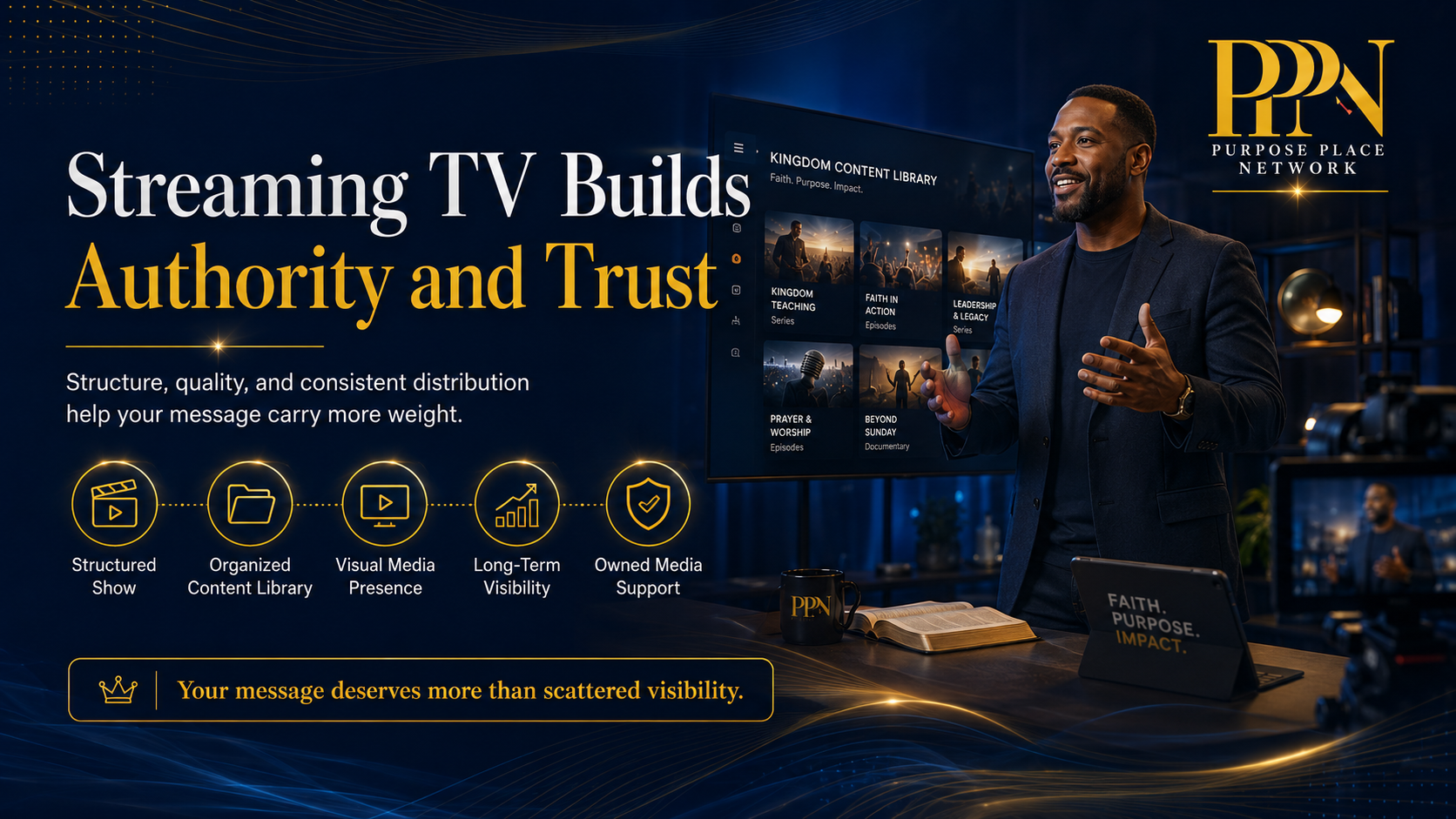
Streaming TV Builds Authority and Trust
Platform positioning matters.
When a Christian creator moves from only posting social media content to having a structured show, program, or channel presence, the audience often perceives the work differently.
It signals intentionality.
It says, “This is not just random content.”
It says, “This message has structure.”
It says, “This creator is building something.”
It says, “This ministry is thinking beyond the moment.”
It says, “This brand is serious about distribution.”
That perception matters for ministries, entrepreneurs, sponsors, collaborators, guests, partners, and viewers.
Authority is not built by visibility alone.
Authority is built through clarity, consistency, quality, and trust.
Streaming TV can support that authority when it is connected to a clear media strategy.
For a podcast host, streaming TV can turn interviews into a visual media experience.
For an author, streaming TV can support a teaching series based on a book.
For a speaker, streaming TV can create a larger platform for thought leadership.
For a ministry, streaming TV can organize sermons, Bible studies, prayer broadcasts, discipleship content, and leadership training.
For a Christian coach or consultant, streaming TV can create a consistent way to educate the audience before asking them to invest.
That is why streaming TV should not be treated as a vanity platform.
Used properly, it becomes part of your authority-building system.
Kingdom Media Needs Infrastructure
One of the greatest needs in Christian media is infrastructure.
Many creators have strong messages but weak systems.
They have powerful conversations but no clear distribution plan.
They have meaningful livestreams but no organized content library.
They have podcast episodes but no visual media strategy.
They have social media clips but no long-term audience pathway.
They have a calling but no platform structure to support it.
This is the gap Purpose Place Network exists to help fill.
Kingdom creators do not only need encouragement to post more.
They need help building better.
They need to understand how to produce, package, distribute, and steward their media content with excellence.
Streaming TV is one piece of that infrastructure.
It helps creators move beyond scattered visibility and into organized distribution.
Without infrastructure, content can become temporary.
With infrastructure, content can continue serving people long after the first post, livestream, interview, or event is over.
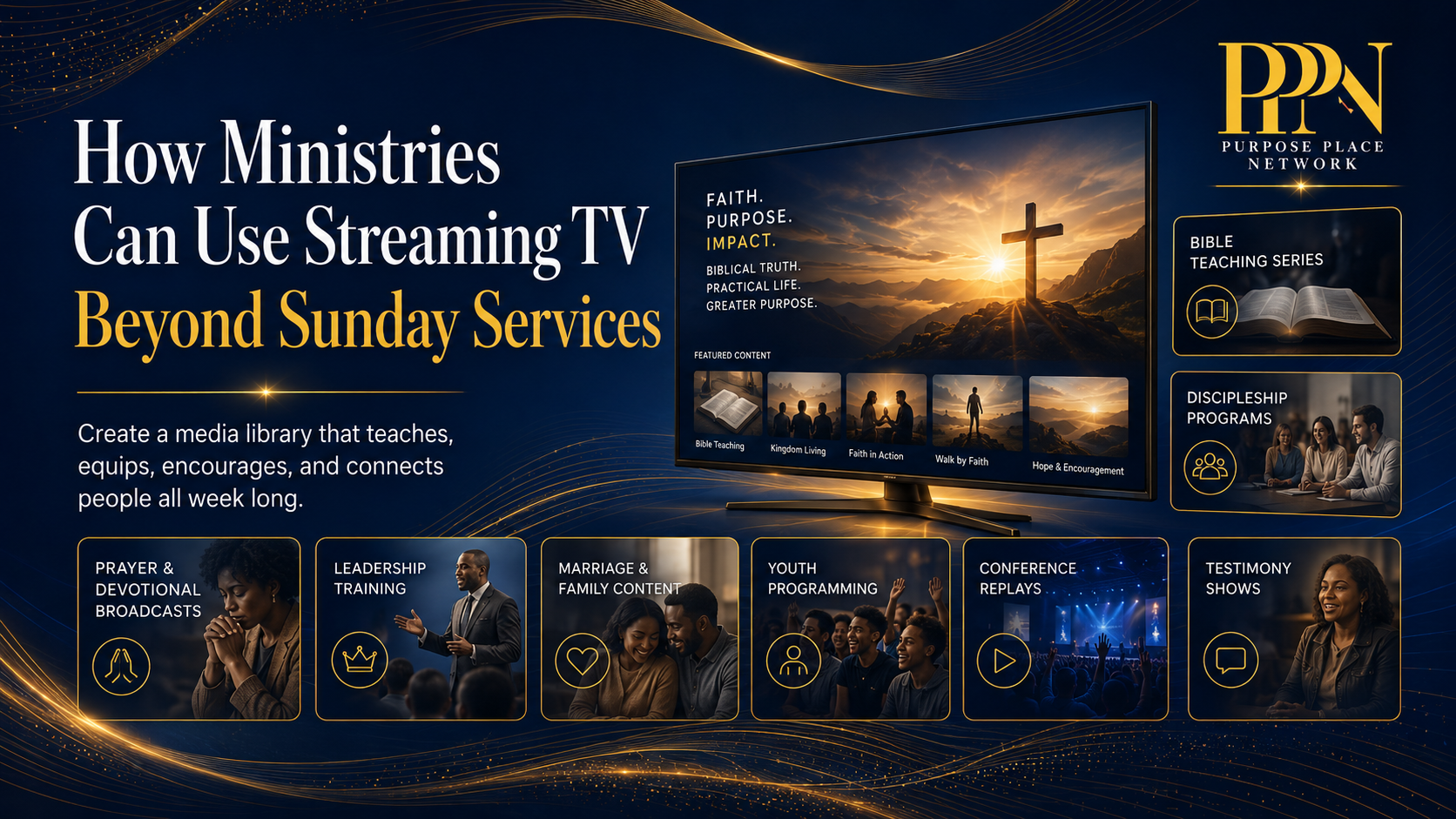
How Ministries Can Use Streaming TV Beyond Sunday Services
When people think about ministry media, they often think only of sermons or Sunday broadcasts.
But streaming TV can support much more than that.
Ministries can create:
Bible teaching series.
Discipleship programs.
Leadership conversations.
Marriage and family content.
Youth and young adult programming.
Prayer and devotional broadcasts.
Community impact stories.
Testimony-based shows.
Conference replays.
Training for ministry teams.
Special programs for partners and supporters.
Outreach and missions documentaries.
Financial stewardship teachings.
Women’s ministry and men’s ministry programming.
New believer classes.
This kind of content allows a ministry to serve people beyond one weekly service.
It also gives churches and ministries a way to reach people who may not walk into the building first, but are willing to watch, listen, learn, and grow from a distance.
That is a real ministry opportunity.
A sermon clip can inspire someone.
A streaming library can disciple them over time.
A livestream can create a moment.
A structured media platform can create a pathway.
A Sunday message can bless the room.
A digital distribution strategy can extend the reach of that message beyond the room.
This is why ministries need to think beyond simply posting the replay.
They need to think about how their content can continue teaching, equipping, encouraging, and connecting people throughout the week.
How Christian Entrepreneurs Can Use Streaming TV to Build Trust
Streaming TV is also valuable for Christian entrepreneurs.
A faith-based coach can create a teaching show.
An author can create a series around their book.
A speaker can host conversations in their area of expertise.
A consultant can educate their audience.
A nonprofit leader can share impact stories.
A podcast host can turn interviews into a visual media experience.
A course creator can use video content to prepare people for deeper training.
A ministry leader can use streaming content to support a larger movement.
This builds trust because people get to see how you think, teach, lead, serve, and communicate over time.
For Christian entrepreneurs, trust is one of the most important assets you can build.
People need to know your voice before they invest in your offer.
They need to understand your values before they partner with your brand.
They need to see consistency before they trust your leadership.
Streaming TV can help create that consistency.
It gives your audience more than a post.
It gives them a place to experience your message with depth.
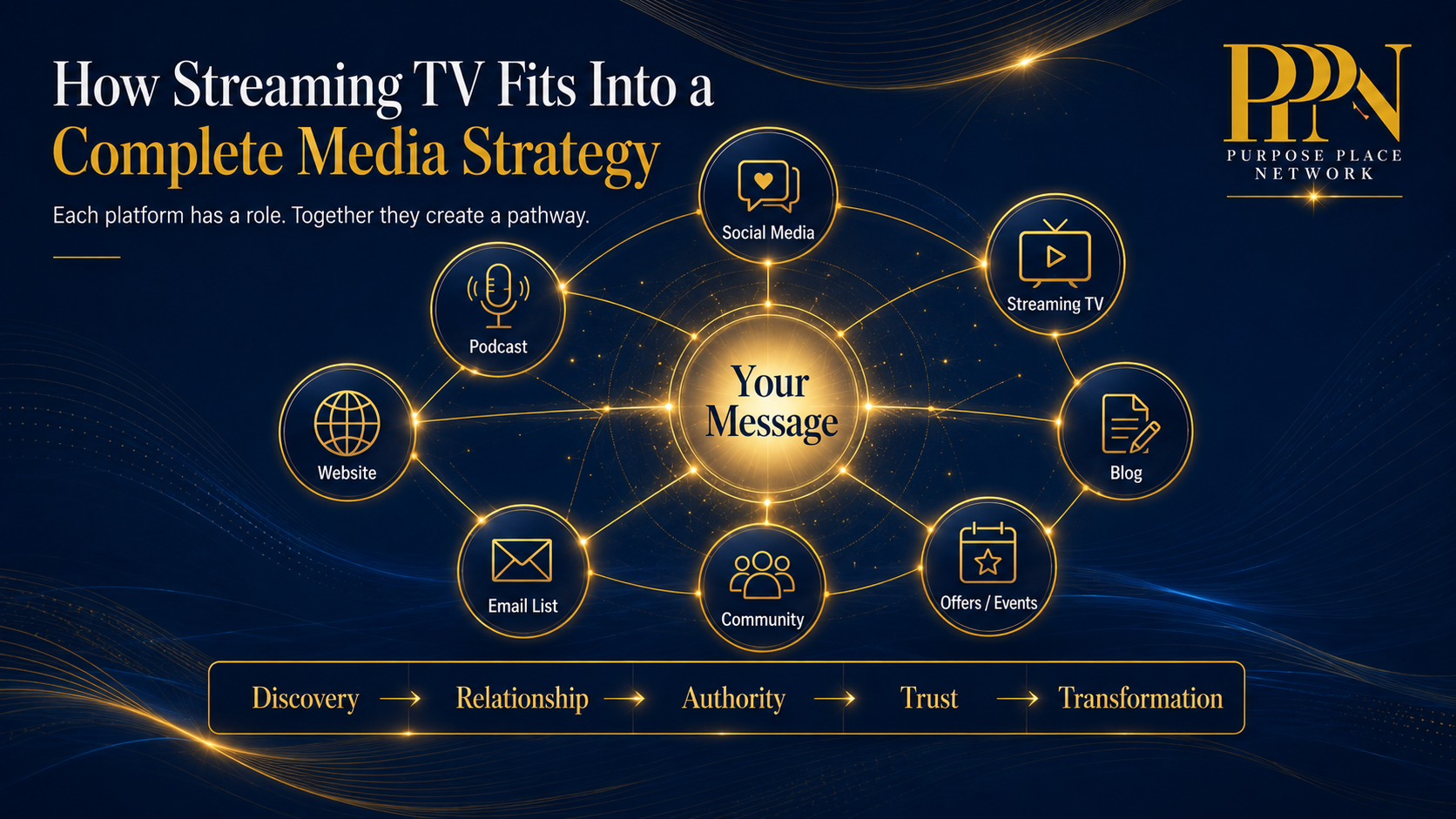
How Streaming TV Fits Into a Complete Media Strategy
Streaming TV should not stand alone.
It works best when it is part of a larger media strategy.
Here is how the pieces can work together:
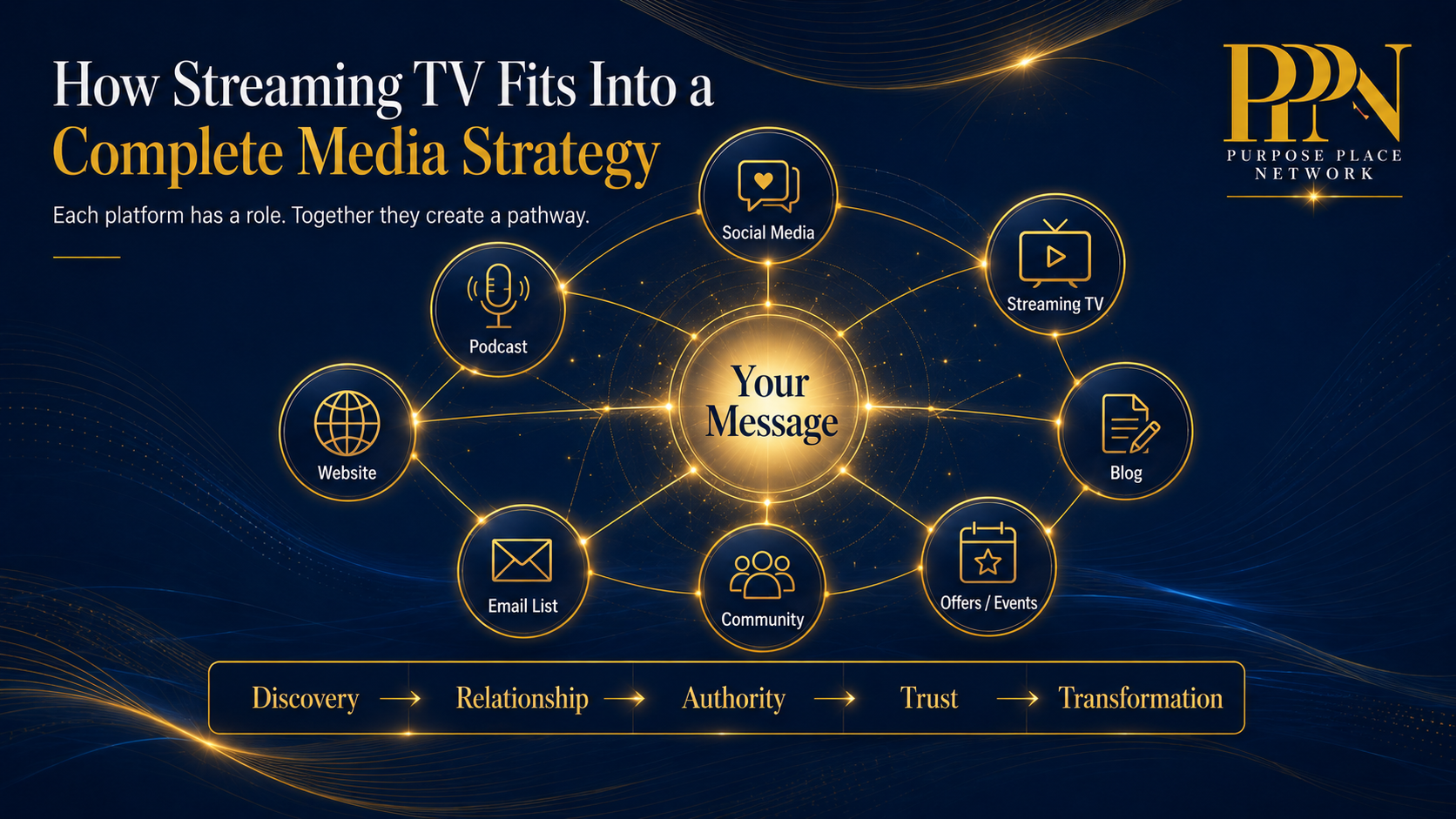
Social media creates discovery.
Podcasting builds relationship.
Streaming TV supports authority and long-form visibility.
Your website organizes your brand.
Your blog makes your message searchable.
Your email list nurtures the relationship.
Your community creates connection.
Your offers, applications, products, services, or events create the next step.
This is how attention becomes relationship.
This is how relationship becomes trust.
This is how trust becomes transformation.
This is how media becomes more than content.
It becomes a pathway.
For example, a Christian podcast host may record a video interview. That one episode can become:
A full streaming TV episode.
An audio podcast.
A blog article.
Several short-form clips.
An email newsletter.
A quote graphic.
A YouTube video.
A discussion topic for a community.
A lead-in to a service, product, event, or application.
That is not random posting.
That is media strategy.
The goal is not to create more work for the sake of being busy.
The goal is to make your message work harder, travel farther, and serve longer.
Streaming TV Supports Owned Media and Long-Term Visibility
Social media platforms can be useful, but they are not fully owned spaces.
Algorithms change.
Reach drops.
Content can be buried quickly.
Accounts can be restricted.
Audiences may not see the content they asked to follow.
Streaming TV helps Christian creators think beyond rented visibility.
It gives your long-form content a more stable place to live.
It allows your episodes, shows, teachings, interviews, and programs to become part of an organized media library.
This matters because your message should not disappear after one post.
If God has given you a testimony, teaching gift, creative idea, business solution, ministry assignment, or leadership message, then how you distribute that message matters.
You need more than visibility.
You need stewardship.
You need structure.
You need strategy.
The Future of Faith-Based Media Requires Ownership and Excellence
The future of faith-based media will require more than inspiration.
It will require ownership.
It will require strategy.
It will require production quality.
It will require audience development.
It will require distribution beyond one platform.
It will require creators who understand both calling and infrastructure.
Kingdom creators cannot afford to treat media casually.
Media is one of the primary ways messages are being discovered, tested, trusted, and shared.
That means Christian creators must become better stewards of their digital presence.
Streaming TV is not about chasing fame.
It is about expanding reach with intention.
It is about creating spaces where faith-based content can be seen, heard, organized, and accessed with excellence.
It is about helping the right people find the right message at the right time.
Purpose Place Network Is Built for This Moment
Purpose Place Network exists to help Christian creators, ministries, podcast hosts, streaming TV hosts, speakers, authors, coaches, and faith-based entrepreneurs use media with purpose.
The vision is not simply to place shows on a platform.
The vision is to help Kingdom voices understand media strategy, build authority, distribute content, and create long-term impact.
Streaming TV matters because the message matters.
The platform matters because stewardship matters.
The strategy matters because people need more than scattered posts.
They need clear pathways to receive the message, grow from it, and stay connected.
If you are a Christian creator, now is the time to think bigger.
Not just more content.
Better structure.
Better distribution.
Better stewardship.
Greater Kingdom impact.
Ready to Build a Stronger Streaming TV Strategy?
If you are ready to explore how your ministry, podcast, show, or faith-based brand can use streaming TV as part of a stronger media strategy, Purpose Place Network is here to help you build with purpose.
Download the free Christian Creator Guide from Purpose Place Network and learn how podcasting, streaming TV, digital content, and audience-building strategy can help you expand your message with clarity and intention.
If you are ready for deeper support, apply to work with Purpose Place Network and begin building the media infrastructure your message deserves.
Your message deserves more than scattered visibility.
It deserves structure.
It deserves stewardship.
It deserves a strategy.
Frequently Asked Questions
What is streaming TV for Christian creators?
Streaming TV for Christian creators is the use of digital streaming platforms, apps, and on-demand video channels to distribute faith-based shows, teaching programs, interviews, podcast videos, ministry broadcasts, and other long-form content. It allows creators to present their message in a more structured viewing environment beyond traditional social media posts.
Why should ministries consider streaming TV?
Ministries should consider streaming TV because it gives them a way to serve people beyond Sunday services. Sermons, Bible studies, prayer broadcasts, discipleship programs, leadership training, testimony shows, and community impact stories can all be organized into a media library that continues serving viewers over time.
Is streaming TV better than social media?
Streaming TV is not a replacement for social media. Social media is useful for discovery, engagement, and promotion. Streaming TV is better suited for long-form content, structured programming, authority-building, and deeper viewer engagement. A strong media strategy uses both, but gives each platform a clear role.
How can podcast hosts use streaming TV?
Podcast hosts can use streaming TV by turning video podcast episodes into structured shows. Interviews, solo teachings, panel conversations, and special series can be distributed as full episodes while clips from those episodes can still be used on social media for promotion and discovery.
What kind of content can ministries put on streaming TV?
Ministries can put sermons, Bible studies, prayer broadcasts, devotional series, discipleship classes, leadership conversations, conference replays, testimony shows, outreach documentaries, marriage and family content, youth programming, and training for ministry teams on streaming TV.
How does streaming TV help Christian entrepreneurs build trust?
Streaming TV helps Christian entrepreneurs build trust by allowing viewers to see their teaching style, values, communication, leadership, and expertise over time. A coach, author, speaker, consultant, or service provider can use streaming TV to educate the audience before inviting them into a deeper offer or partnership.
How does Purpose Place Network help Christian creators with streaming TV?
Purpose Place Network helps Christian creators, ministries, podcast hosts, streaming TV hosts, speakers, authors, coaches, and faith-based entrepreneurs use media with clarity and purpose. The network supports creators in thinking beyond scattered content and building stronger media strategy, digital distribution, and long-term Kingdom impact.
Sources
This article references Nielsen’s The Gauge reporting on streaming television viewership:
Nielsen: Streaming Shatters Multiple Records in December 2025 with 47.5% of TV Viewing
