
Why Ministries and Christian Creators Need a Media Strategy in 2026
Jun 08, 2026
In 2026, posting more is not the answer.
Many ministries, Christian creators, podcast hosts, speakers, coaches, authors, and faith-based entrepreneurs are visible online. They post on Facebook. They go live on Instagram. They upload sermons to YouTube. They share podcast episodes. They promote events. They invite people to watch, listen, register, attend, or buy.
That is a good start.
But visibility alone does not build authority, community, trust, or long-term impact.
The question is no longer, “Are you creating content?”
The better question is, “Do you have a media strategy?”
A media strategy is the intentional plan behind your message, your platforms, your audience, your content, and your long-term impact. It helps you move beyond random posting and into purposeful communication.
For ministries and Christian creators, this matters deeply because your message is not just content. It is stewardship.
Social Media Activity Is Not the Same as Media Strategy
Many faith-based creators are busy online but still unclear about what their media is building.
They may have consistent posts, frequent livestreams, podcast interviews, short-form videos, and event promotions, but their audience still may not fully understand who they serve, what problem they solve, what message they carry, or why their voice matters.
That is because activity creates visibility, but strategy creates authority.
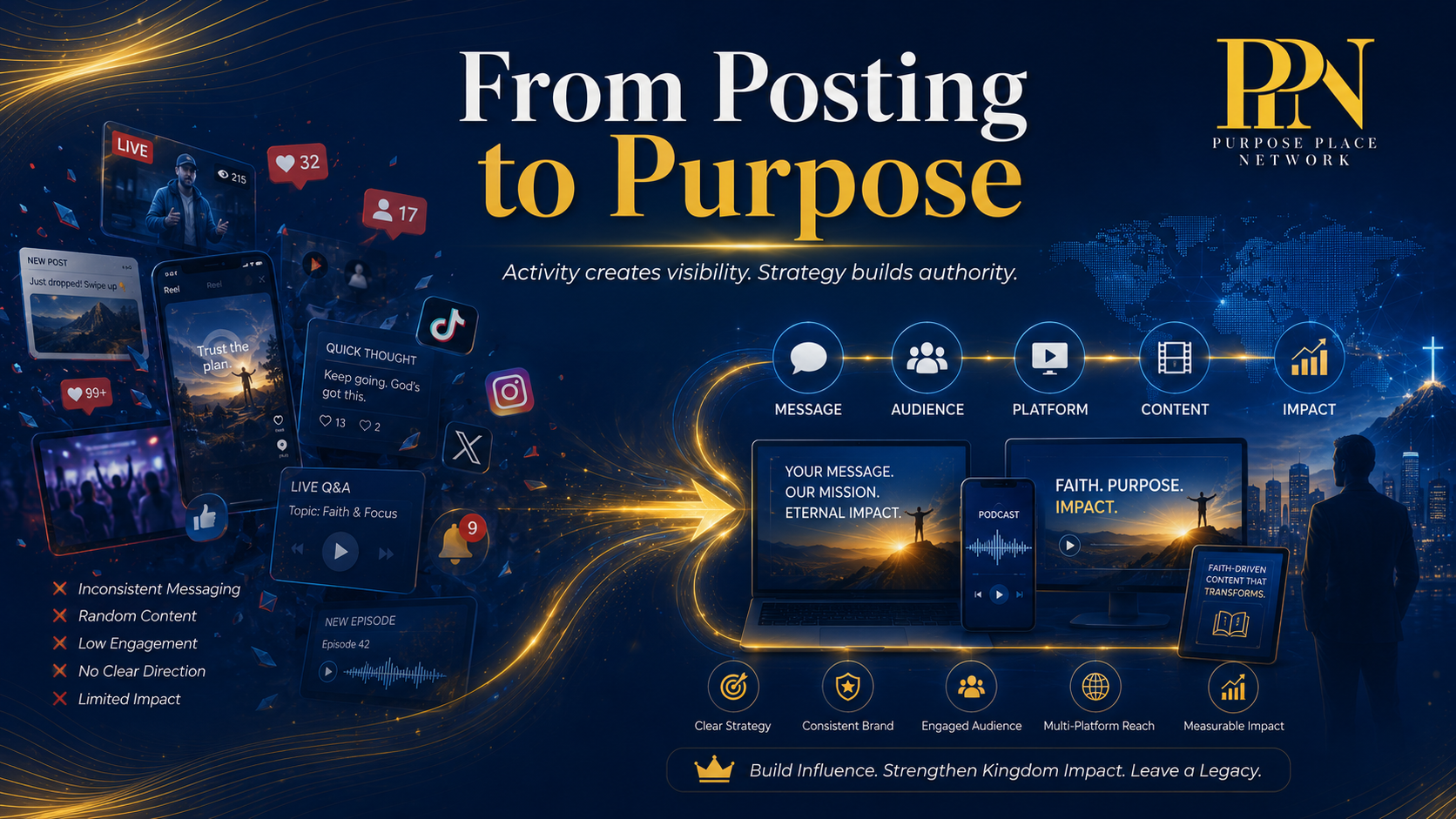
When your content is only reactive, it becomes exhausting. You are constantly trying to keep up with trends, algorithms, platform changes, and whatever type of content seems to be working that week. You post because you feel pressure to stay visible, not because the content fits into a larger mission.
A strong media strategy gives your content direction.
It answers questions like:
Who are we called to reach?
What message are we responsible for carrying?
What platforms help us reach that audience best?
What kind of content builds trust over time?
How do we move people from casual viewers to committed community members?
How do we turn media attention into ministry impact?
Without those answers, content becomes scattered. With those answers, content becomes infrastructure.
Why 2026 Requires a Different Kind of Media Strategy
The digital landscape is no longer simple.
People are discovering ministries, messages, and leaders through many different entry points. Someone may first encounter your ministry through a short video clip. Another person may find you through a podcast interview. Someone else may discover your teaching through a blog article, livestream replay, streaming TV episode, YouTube search, social media post, email newsletter, or shared link from a friend.
That means your media presence is no longer just promotional.
It is part of your ministry’s front door.
Before someone visits your church, books your service, listens to your full podcast, registers for your event, joins your community, or becomes a client, they may first meet you online.
That first digital encounter matters.
In 2026, ministries and Christian creators need more than random content. They need clear messaging, consistent platforms, owned audience pathways, searchable content, and a system for turning attention into trust.
This does not mean every ministry has to become flashy, trendy, or performance-driven. It means every ministry must become more intentional.
Kingdom media should be clear, consistent, trustworthy, and aligned with purpose.
Ministry Media Must Be Built With Intention
For years, many churches and ministries treated media as an add-on.
The sermon happened in the room.
The event happened in the building.
The recording was posted later.
The livestream was available for whoever happened to see it.
That model is no longer enough.
Media is often the first place people encounter a ministry, a message, or a leader. Your website, podcast, livestream, social media, email list, streaming TV channel, and digital content all work together to shape how people understand your mission.
This is why ministries need to stop thinking of media as a task and start thinking of media as part of the mission.
A clear ministry media strategy helps you communicate with people before they walk into the room, after they leave the room, and during the week when they are trying to apply what they heard.
It helps you disciple, teach, equip, encourage, and lead beyond a single service or event.
Christian Creators Need Owned Platforms
One major reason ministries and Christian creators need a media strategy is because social media platforms are not fully owned spaces.
You can build a following on Facebook, Instagram, TikTok, LinkedIn, or YouTube, but you do not own those platforms. Algorithms change. Reach drops. Accounts can be restricted. Content may not be shown to the people who asked to follow you.
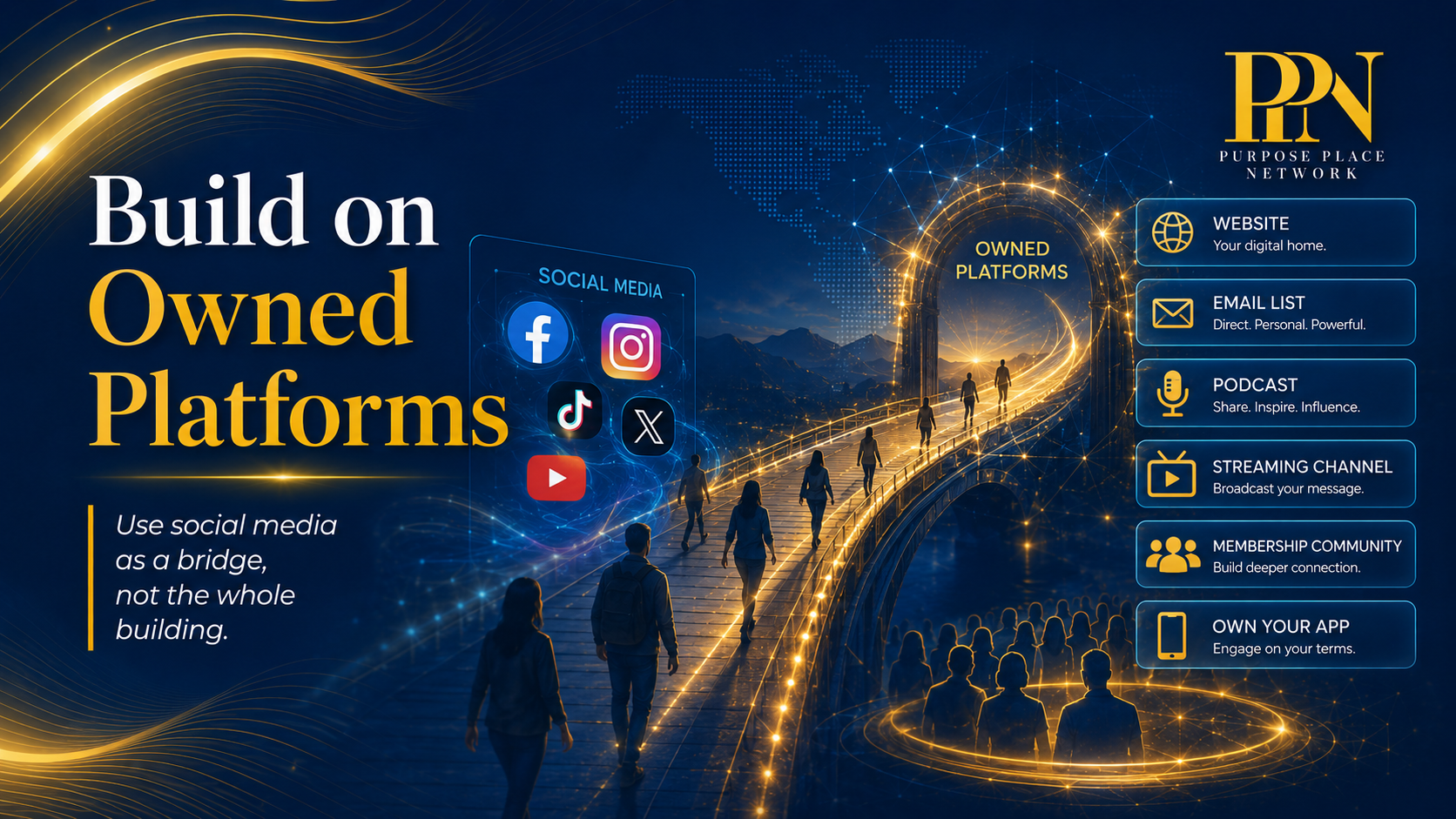
Social media is useful, but it should not be your entire foundation.
A wise media strategy uses social media as a bridge, not the whole building.
The goal is to move people into spaces where you can build a stronger relationship with them, such as your website, email list, podcast audience, streaming TV channel, membership community, app, or digital platform.
This is why owned audience matters.
A follower may see your content.
An owned audience can be nurtured.
A viewer may watch once.
A community can grow with you over time.
Christian creators need to think beyond likes, shares, views, and short-term engagement. Those metrics can be helpful, but they are not the full measure of impact.
The deeper question is this: are you building something that can last?
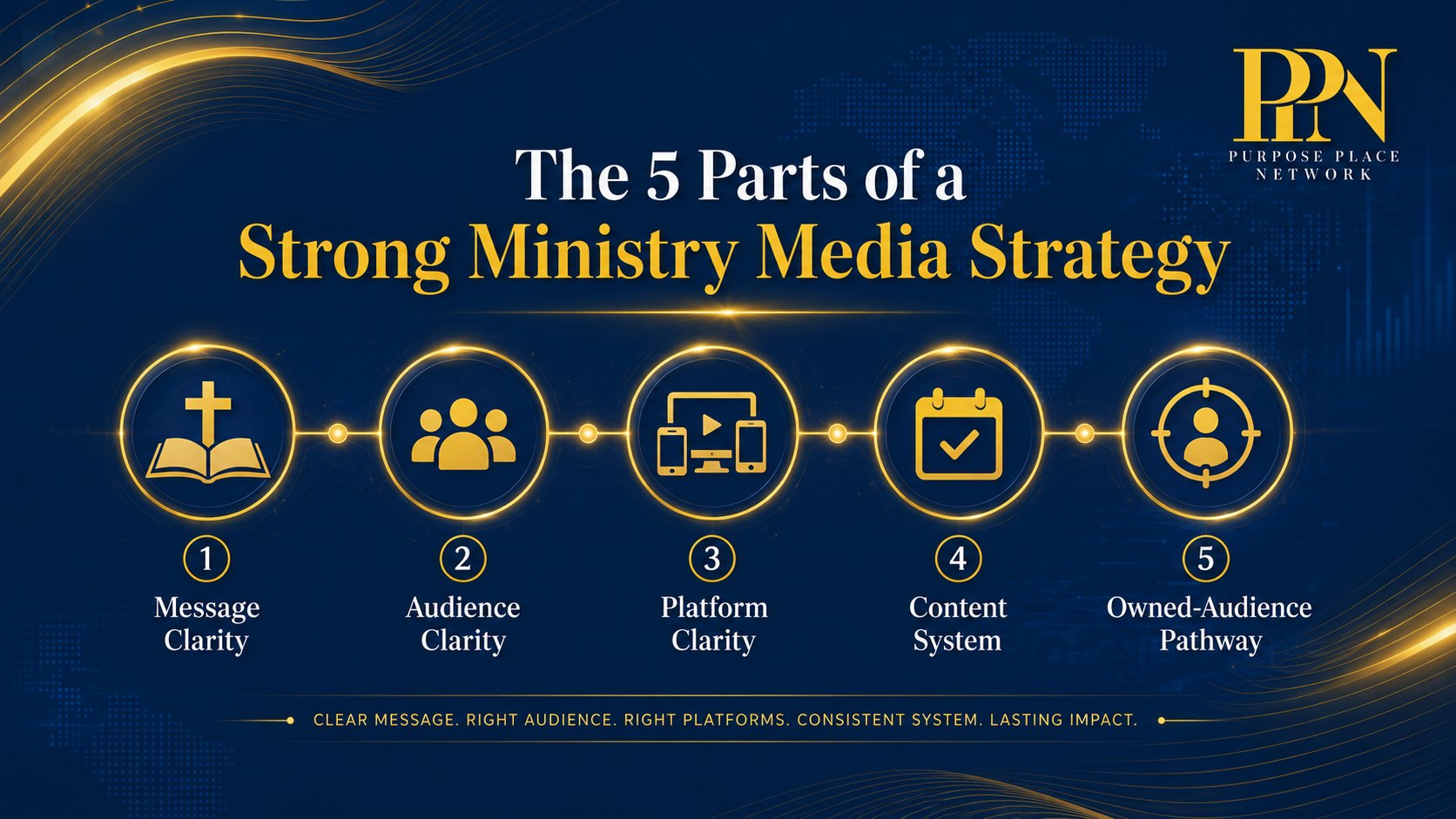
The 5 Parts of a Strong Ministry Media Strategy
A strong media strategy does not have to be complicated, but it does need to be intentional.
Here are five core parts every ministry, Christian creator, podcast host, and faith-based entrepreneur should consider.
1. Message Clarity
Before you build more content, you need to clarify your message.
What are you called to communicate?
What problem are you helping people solve?
What biblical truth, practical wisdom, testimony, teaching gift, or leadership insight are you responsible for stewarding?
Without message clarity, your content can become confusing. One week you are sharing motivation. The next week you are promoting an event. The next week you are reacting to a trend. Over time, your audience may see you, but they may not understand you.
Message clarity helps people know what you stand for, who you serve, and why they should keep listening.
2. Audience Clarity
A media strategy also requires audience clarity.
You are not called to reach everyone in the same way.
A church may be called to reach families in a specific community. A Christian business coach may be called to serve Kingdom entrepreneurs. A podcast host may be called to encourage women in leadership. A ministry may be called to disciple new believers, strengthen marriages, support veterans, equip marketplace leaders, or help young adults grow in faith.
When you know who you are called to reach, your content becomes more focused.
You know what questions to answer.
You know what language to use.
You know what platforms matter most.
You know what kind of support your audience actually needs.
Audience clarity turns your content from general inspiration into targeted ministry and meaningful service.
3. Platform Clarity
Every platform has a different purpose.
Your website helps people understand who you are and what you offer.
Your blog helps your message become searchable.
Your podcast helps people build a deeper relationship with your voice.
Your livestream helps you create real-time connection.
Your YouTube channel helps people discover and revisit your teaching.
Your email list helps you nurture people directly.
Your streaming TV channel helps position your content with greater authority and long-form visibility.
Your social media helps create awareness and conversation.
A strong media strategy does not require you to be everywhere. It requires you to understand what each platform is supposed to do.
When each platform has a role, your media becomes easier to manage and more effective over time.
4. Content System
A strong media strategy includes a content system.
Many ministries and creators only use media to promote what they are doing.
Their content mostly says:
Watch this episode.
Join this livestream.
Register for this event.
Meet this guest.
Buy this product.
Come to this service.
Those posts have a place, but they cannot carry the entire brand.
To build authority, your content should also educate, explain, equip, and lead.
Your audience needs content that helps them understand why your message matters.
For Purpose Place Network, that means teaching topics such as:
Why Christian creators need owned platforms.
Why streaming TV matters for faith-based voices.
How podcasts build authority.
How ministries can use digital media wisely.
How Kingdom entrepreneurs can expand their message.
Why audience building is part of stewardship.
How media can support ministry, business, and community impact.
This kind of content positions your brand as more than a platform. It positions your brand as a guide.
5. Owned-Audience Pathway
The final piece is an owned-audience pathway.
Once someone sees your content, where should they go next?
Should they visit your website?
Download a free guide?
Join your email list?
Listen to your podcast?
Watch your streaming TV show?
Book a consultation?
Register for a class?
Join your membership community?
Apply to be featured?
Many creators lose momentum because there is no clear next step. People may enjoy the content, but they are not invited into a deeper relationship.
A media strategy helps you build a pathway from visibility to trust, and from trust to action.
This is where conversion begins.
Not through pressure.
Not through manipulation.
Through clarity, consistency, service, and invitation.
Media Strategy Helps You Steward Your Message
For faith-based leaders, media is not just marketing.
It is stewardship.
If God has given you a message, testimony, teaching gift, creative idea, business solution, or ministry assignment, then how you distribute that message matters.
A media strategy helps you steward your voice with discipline.
It helps you avoid saying everything to everyone.
It helps you create content with focus.
It helps your audience recognize your area of authority.
It helps your message become easier to understand, share, and trust.
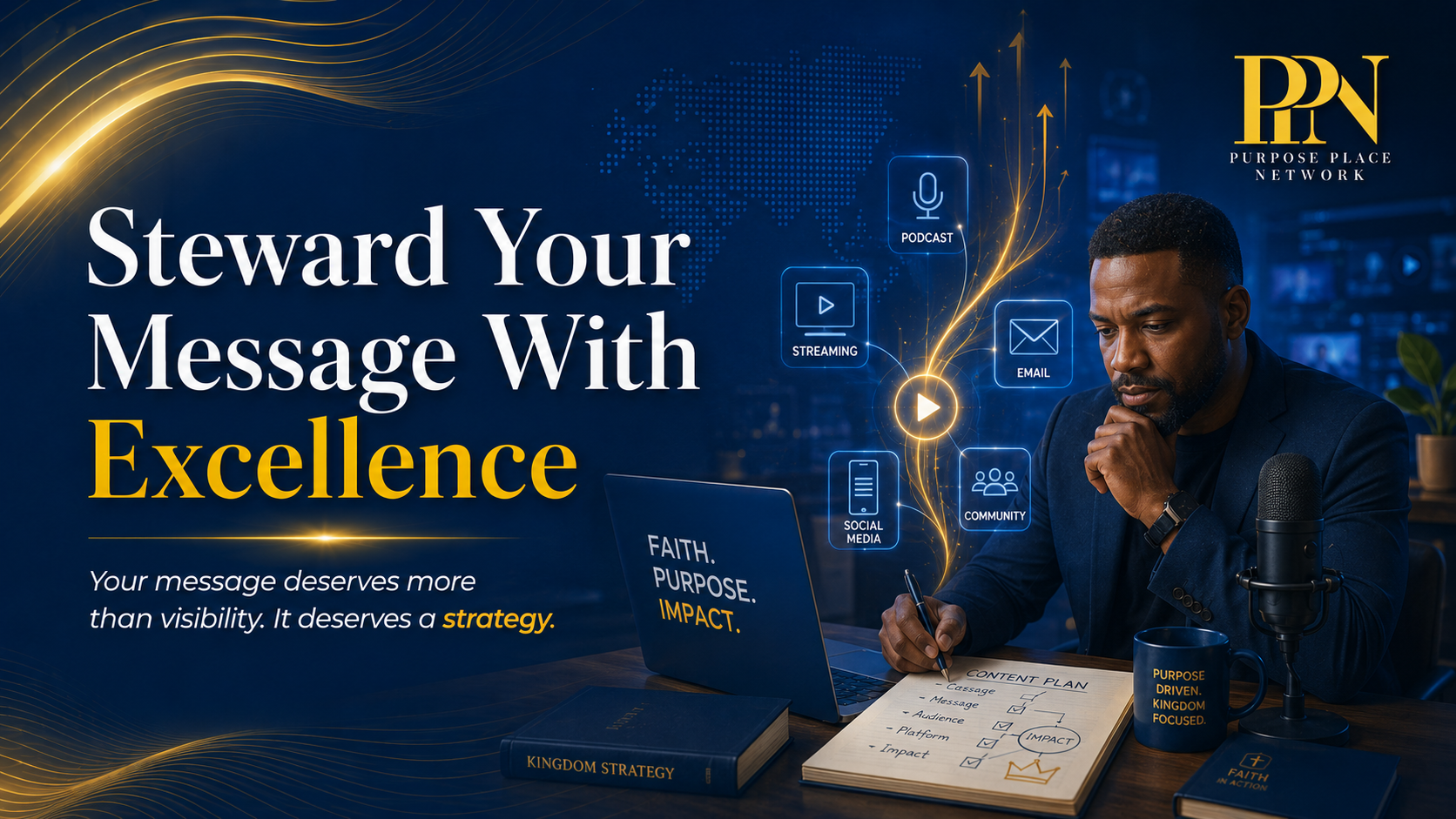
For example, a Christian entrepreneur may feel called to teach biblical stewardship and business growth. Without strategy, their content may jump from motivation to product promotion to personal updates with no clear direction.
With strategy, their content can become a clear body of work around faith, finances, leadership, and Kingdom entrepreneurship.
That clarity builds trust.
And trust is what turns casual viewers into followers, followers into community members, community members into customers, and customers into brand advocates.
The Future Belongs to Builders
The future of faith-based media will not belong only to the people who post the most.
It will belong to the people who build with clarity.
Christian creators need more than content calendars.
Ministries need more than livestream links.
Entrepreneurs need more than promotional graphics.
They need media systems.
They need strategy.
They need distribution.
They need consistency.
They need ownership.
They need infrastructure.
That is where Purpose Place Network comes in.
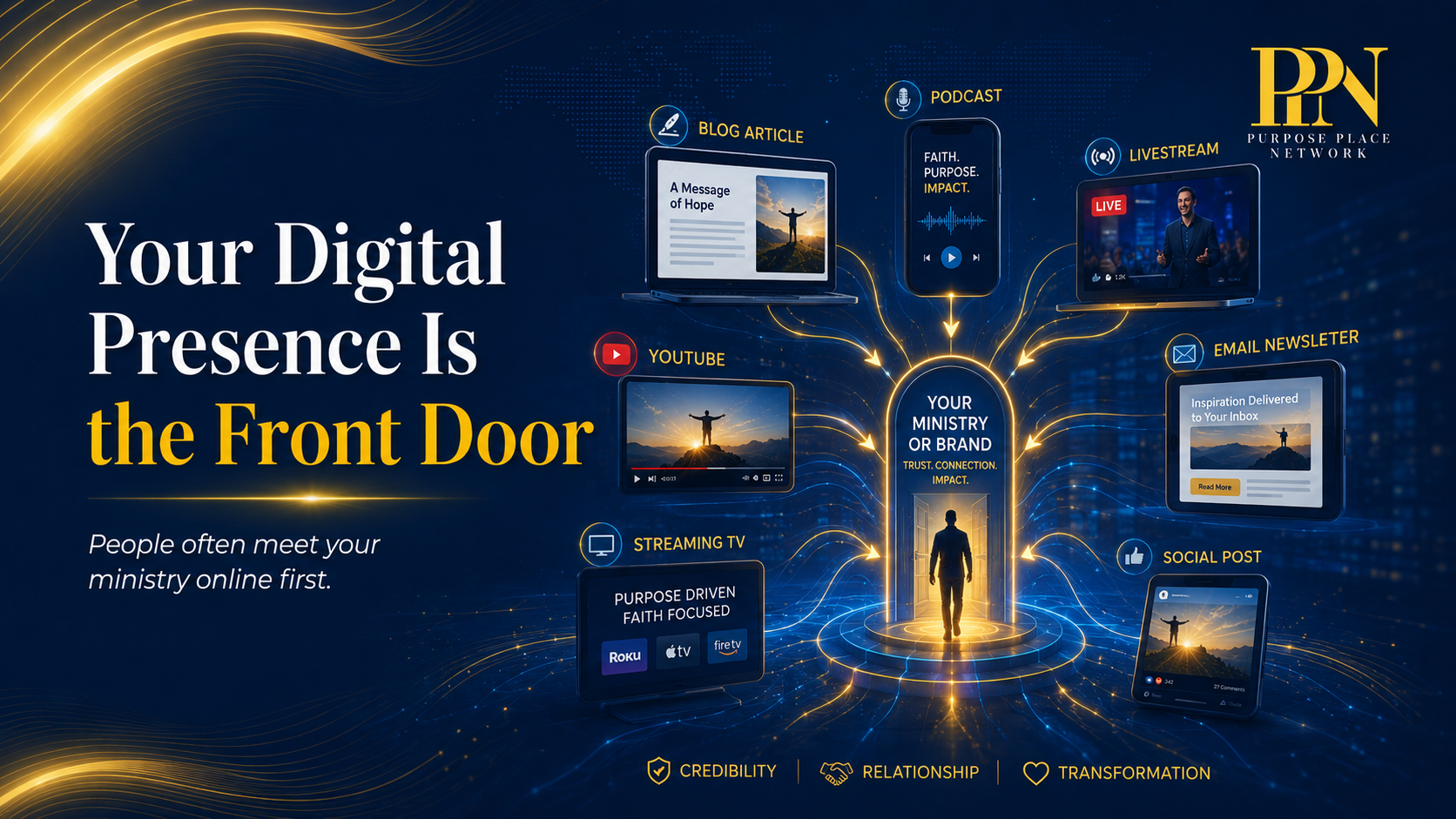
Purpose Place Network exists to help Christian creators, ministries, podcast hosts, and faith-based entrepreneurs understand the power of digital media and use it with intention.
We believe Kingdom voices should not be hidden, scattered, or dependent on one platform. They should be equipped, positioned, and distributed with excellence.
Your message deserves more than occasional visibility.
It deserves a strategy.
Ready to Build With Purpose?
If you are a Christian creator, ministry leader, podcast host, speaker, coach, author, or faith-based entrepreneur ready to build a stronger media presence, Purpose Place Network can help you think beyond posting and begin building with purpose.
You do not need to keep creating content without a plan.
You need a media strategy that helps the right people find you, trust you, learn from you, and grow with you.
Download the free Christian Creator Guide from Purpose Place Network and learn the first steps to build a Christ-centered digital platform with clarity, strategy, and purpose.
Your message deserves more than visibility.
It deserves structure.
It deserves stewardship.
It deserves a strategy.
Frequently Asked Questions
What is a media strategy for a ministry?
A media strategy for a ministry is an intentional plan for how the ministry communicates its message across digital platforms. It includes the ministry’s audience, message, content types, platforms, publishing schedule, and next steps for helping people move from viewers to engaged community members.
Why do Christian creators need a media strategy?
Christian creators need a media strategy because posting content without direction can lead to confusion, burnout, and inconsistent results. A strategy helps creators clarify their message, build trust, grow an owned audience, and use media as a tool for Kingdom impact.
Is social media enough for ministry growth?
Social media is helpful, but it should not be the only foundation for ministry growth. Ministries and Christian creators also need owned platforms such as a website, email list, podcast, streaming TV channel, app, or membership community so they can build deeper relationships with their audience.
How can a podcast help a Christian creator build authority?
A podcast helps a Christian creator build authority by allowing them to teach consistently, share meaningful conversations, explain their message in depth, and build trust with listeners over time. Podcast content can also be repurposed into blog posts, social media clips, livestream topics, and email content.
How does Purpose Place Network help Christian creators?
Purpose Place Network helps Christian creators, ministries, podcast hosts, and faith-based entrepreneurs use digital media with intention. The network supports Kingdom voices through media strategy, podcasting, streaming TV, digital visibility, and platform-building so their messages can reach the people they are called to serve.
