
Why Christian Creators Need an Owned Audience Beyond Social Media
Jun 08, 2026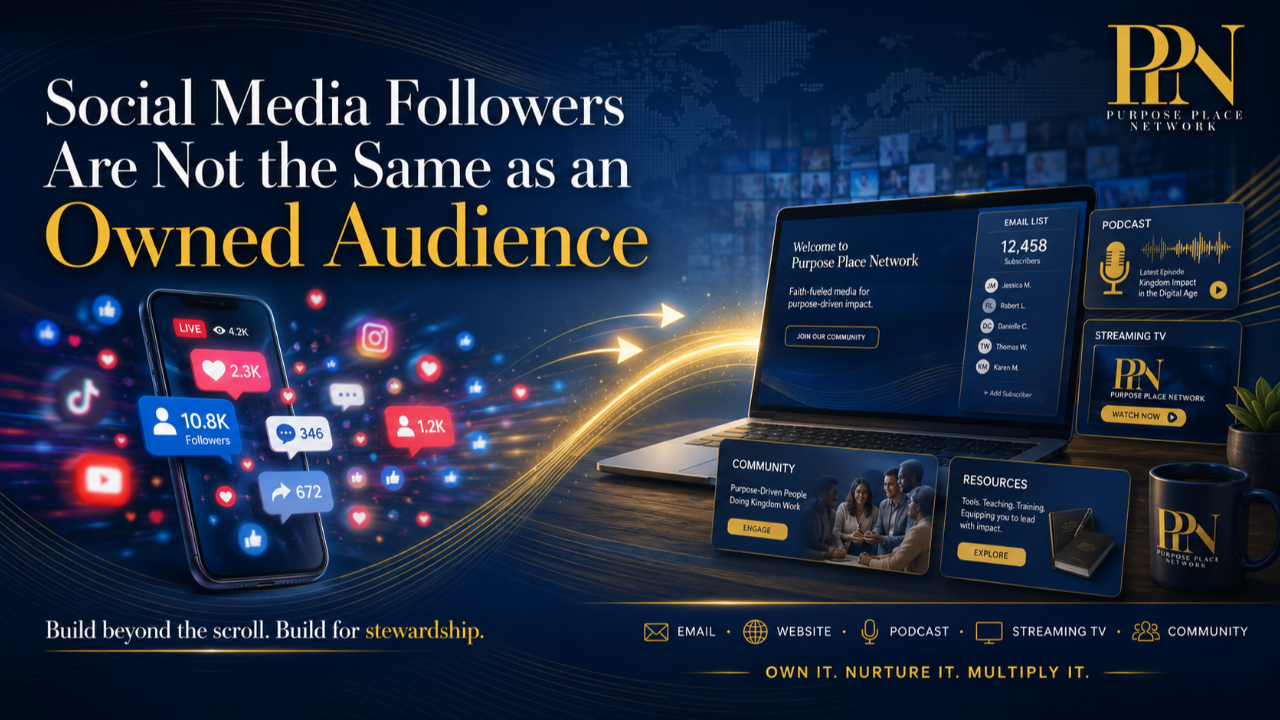
A large social media following can look impressive.
Thousands of followers.
Consistent likes.
Comments under posts.
Shares on short videos.
People watching livestreams.
Guests tagging your brand.
Event promotions moving across platforms.
All of that can be useful.
But followers are not the same as an owned audience.
This distinction matters for every ministry, Christian creator, podcast host, streaming TV host, speaker, author, coach, and faith-based entrepreneur.
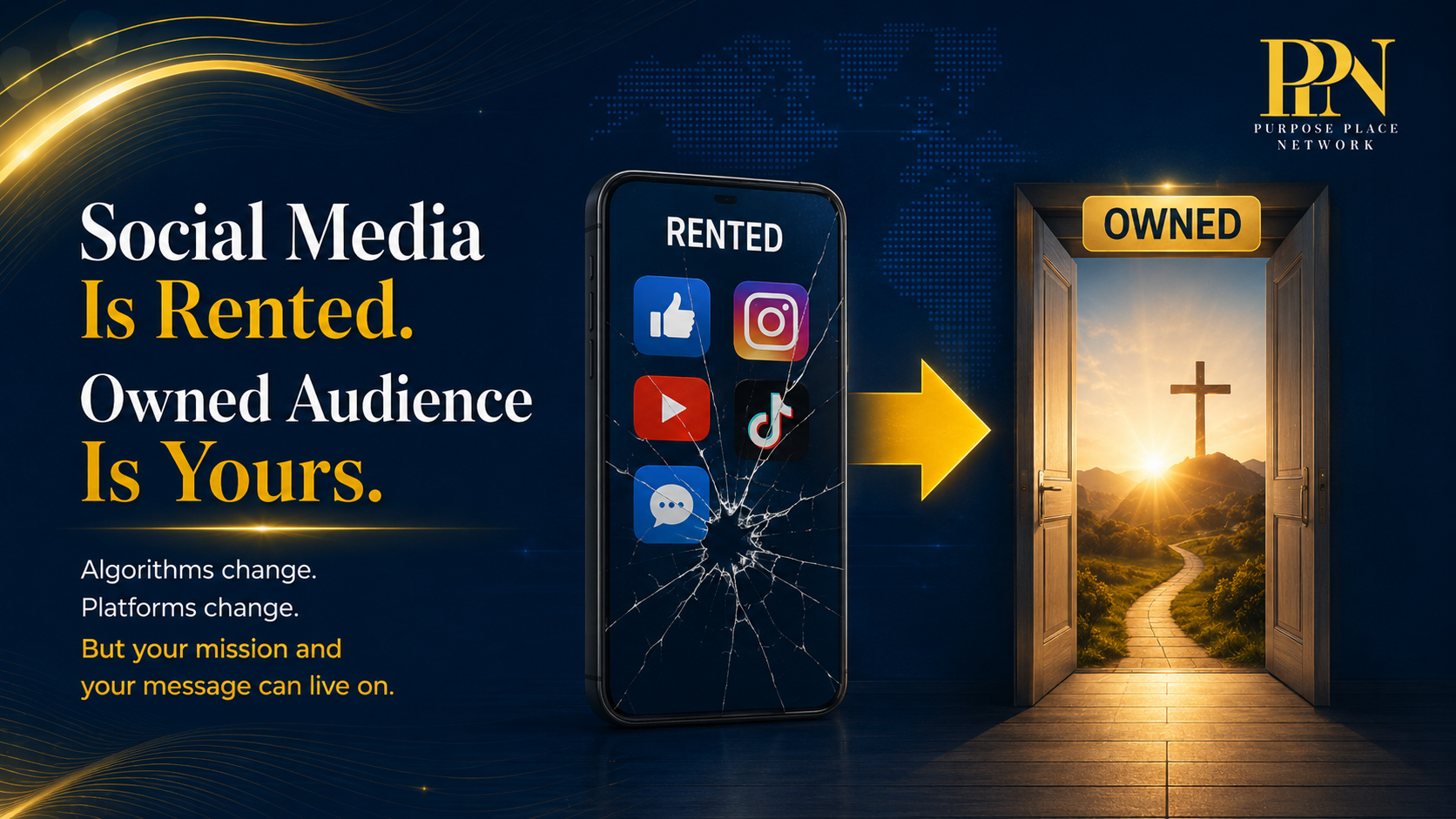
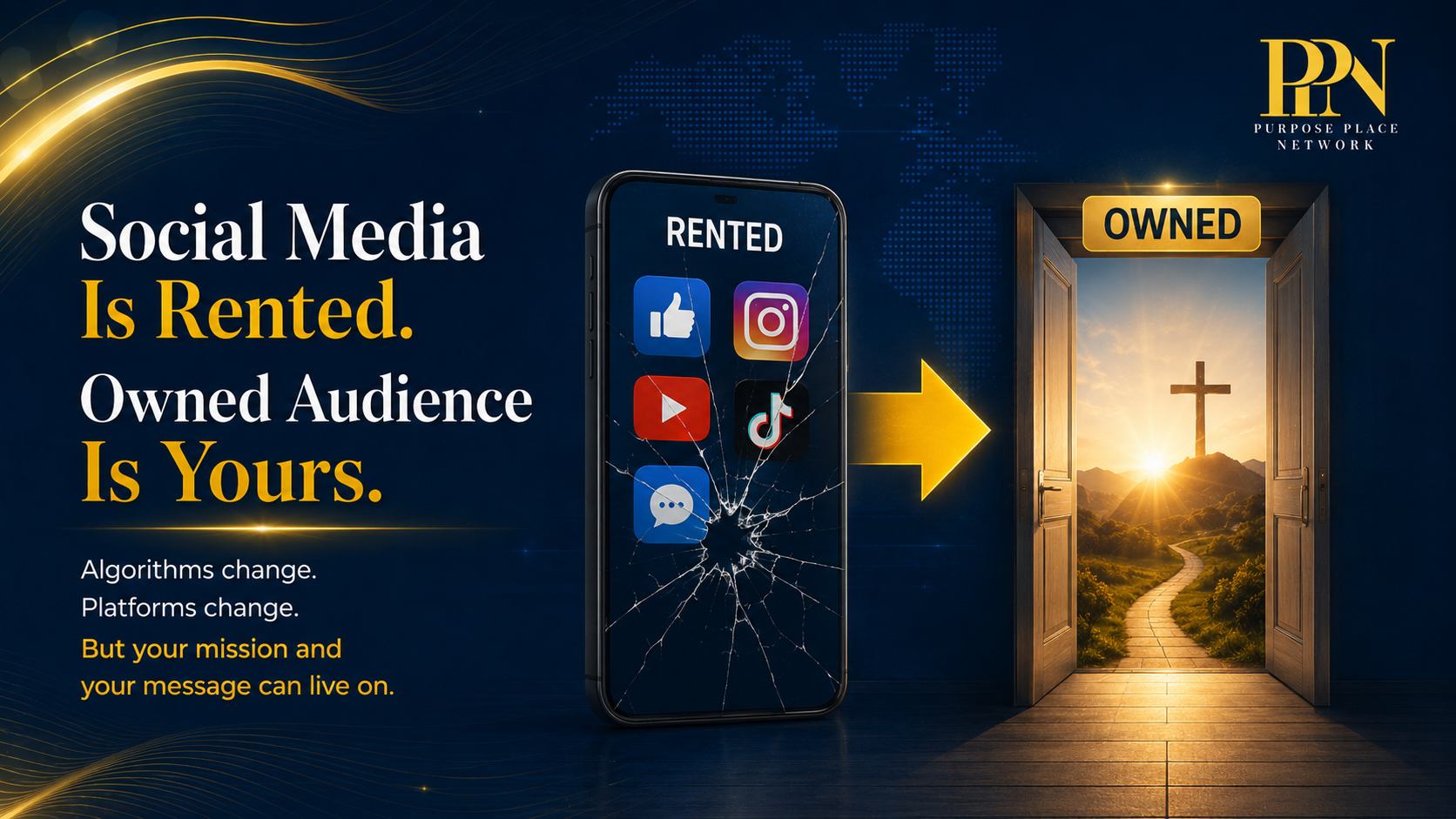
If your entire media presence depends on social media platforms, you are building on rented ground.
Social media may help people discover you, but it should not be the only place where your audience connects with you, learns from you, trusts you, and grows with you.
The Algorithm Should Not Be Your Only Distribution Plan
One of the biggest mistakes Christian creators make is depending on the algorithm to distribute their message.
That is risky.
An algorithm does not have a Kingdom assignment.
An algorithm does not understand your calling.
An algorithm does not carry responsibility for your community.
An algorithm does not owe you consistent reach.
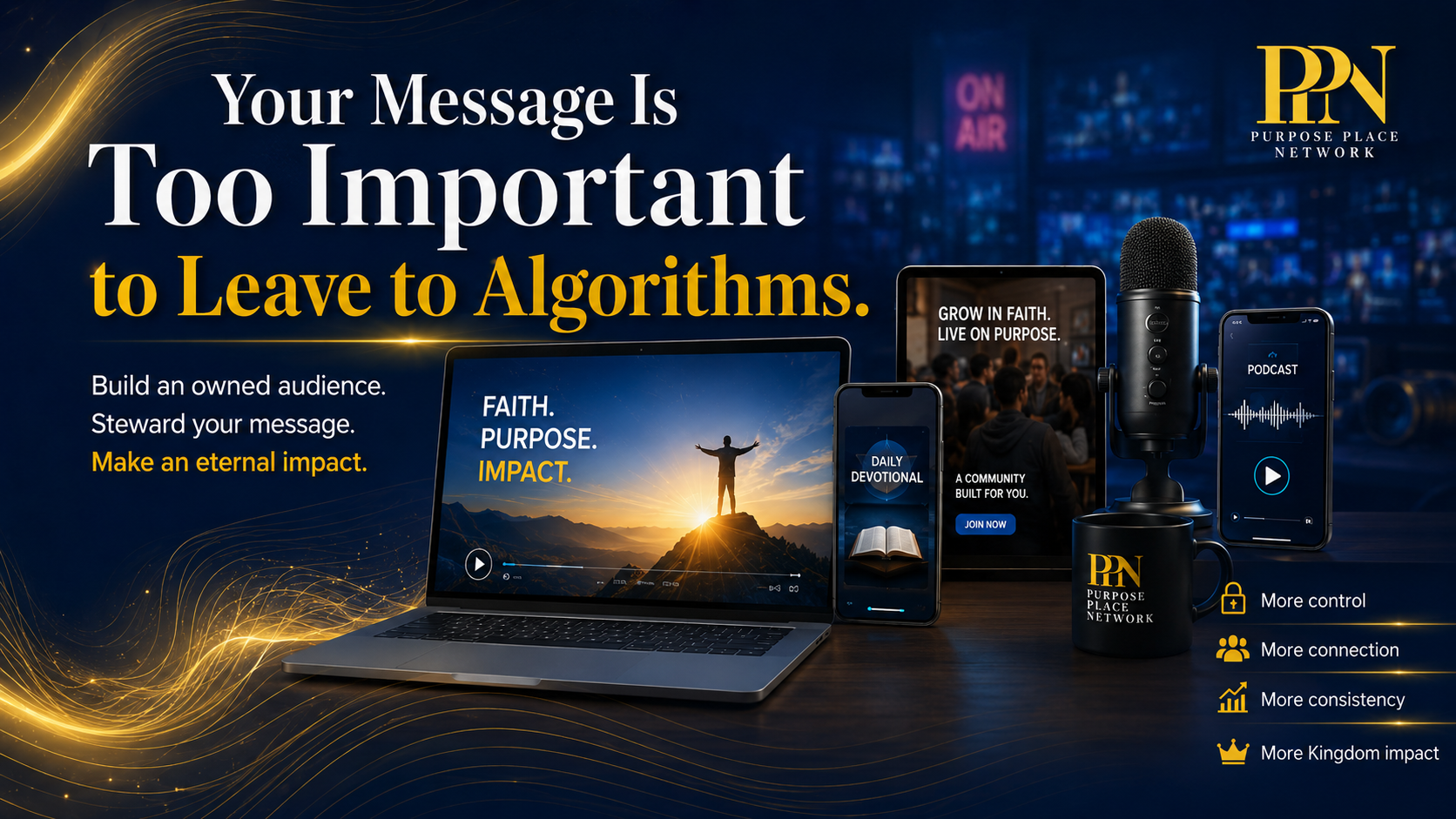
That responsibility belongs to you.
This does not mean you should abandon social media. Social media can be a powerful tool for awareness, connection, promotion, and discovery. It allows ministries and creators to reach people they may never meet through traditional methods.
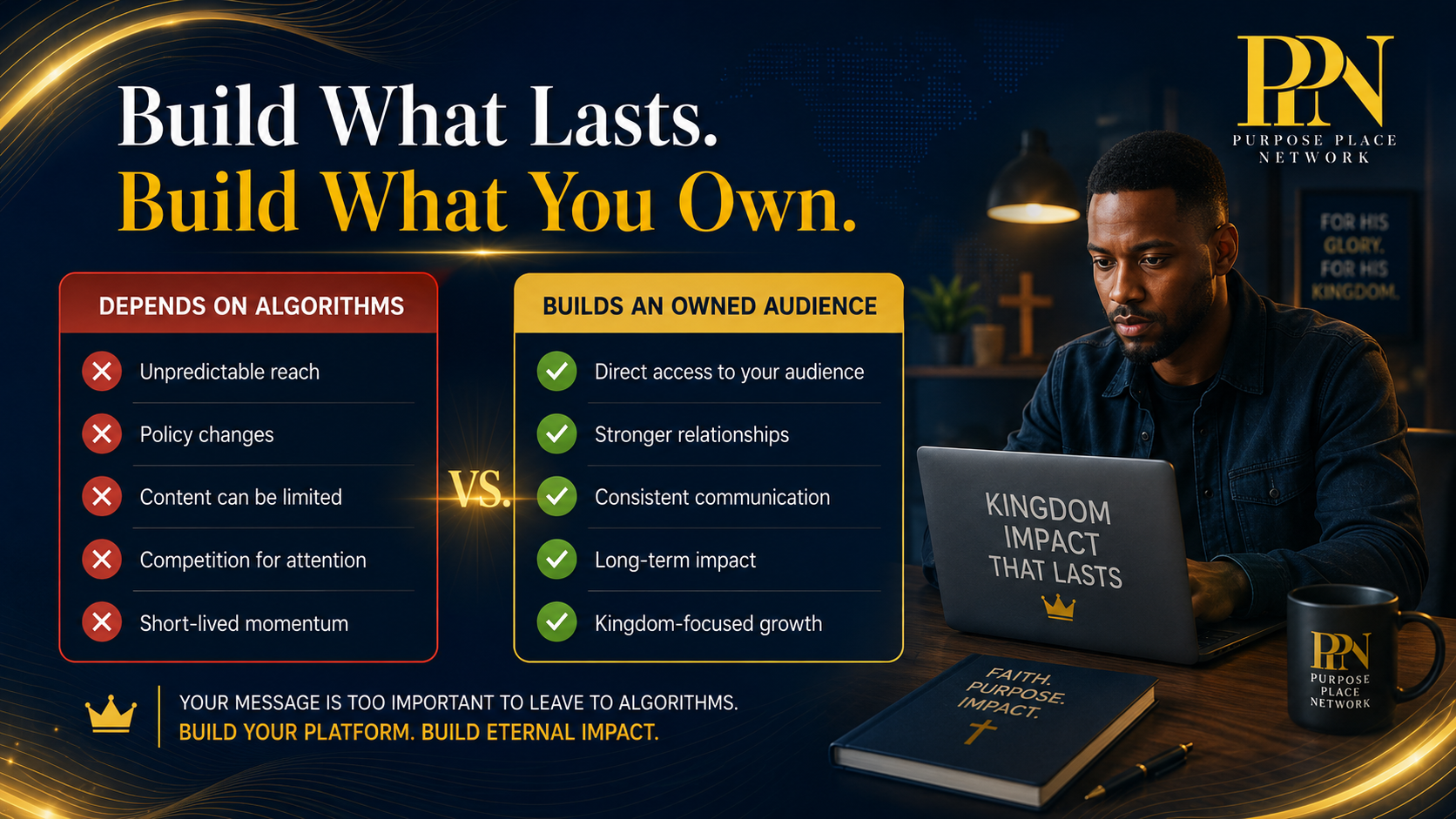
But social media should function as a tool, not the foundation of your entire media strategy.
A tool helps you build.
A foundation carries the weight.
The problem comes when creators confuse attention with ownership.
Just because someone follows you does not mean you have a direct relationship with them.
Just because someone liked your post does not mean they will see your next one.
Just because a video performed well does not mean the platform will continue showing your content to the same people.
Social media platforms control the environment.
They control the algorithm.
They control the reach.
They control the rules.
They control what gets prioritized.
They can change direction without your permission.
That is why Christian creators need to build beyond social media.
What Is an Owned Audience?
An owned audience is an audience you can reach more directly and consistently because the relationship is not completely controlled by a third-party social platform.
Owned audience channels can include:
An email list.
A website audience.
A podcast subscriber base.
A streaming TV audience.
A private community.
A membership platform.
A text list.
A customer list.
A church or ministry database.
A digital course or training platform.
These channels give you more stability.
They allow you to nurture people over time instead of hoping they happen to see your next post.
This matters because Kingdom media is not just about being seen. It is about building trust, discipling through content, educating your audience, and creating long-term impact.
Followers May Watch, But Owned Audiences Can Be Nurtured
A follower may see a 30-second clip and keep scrolling.
An owned audience member is more likely to receive your emails, visit your site, listen to your podcast, watch your full episode, join your community, attend your event, or purchase your product or service.
That does not happen by accident.
It happens through intentional audience building.
Many Christian creators spend most of their energy trying to get more followers, but they do not have a clear system for deepening the relationship with the people already paying attention.
This is a missed opportunity.
The goal is not just to collect views.
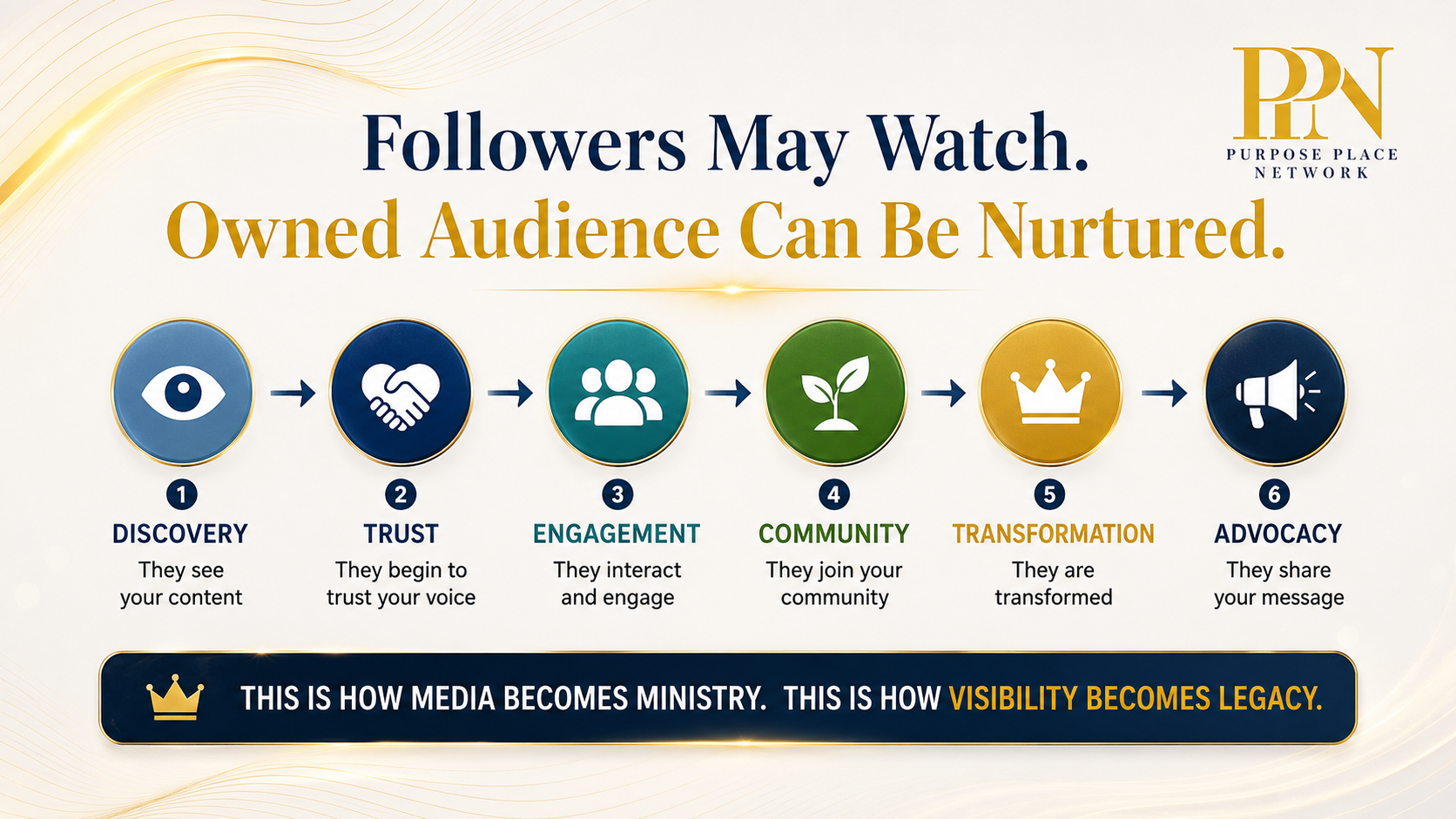
The goal is to move people through a deeper journey:
From discovery to trust.
From trust to engagement.
From engagement to community.
From community to transformation.
From transformation to advocacy.
That is how media becomes ministry.
That is how content becomes impact.
That is how visibility becomes legacy.
Why Owned Audience Matters for Ministries
For ministries, relying only on social media can limit long-term growth.
A sermon clip may inspire someone.
A livestream may reach someone.
A quote graphic may encourage someone.
But what happens next?
Can that person easily find more teaching?
Can they join your email list?
Can they watch your full library of messages?
Can they connect with your ministry beyond one post?
Can they become part of your community?
Can they support the mission?
Can they grow with you over time?
If there is no next step, the moment may pass.
Ministries need more than viral moments. They need digital pathways.
A strong media strategy helps ministries create those pathways with intention.
For example, a church may post a powerful sermon clip that gets shared across Facebook and Instagram. That clip can encourage people, but the ministry needs a deeper pathway. The caption can lead viewers to the full message on the church website, a streaming TV channel, a podcast episode, an email devotional, or a next-step form for prayer, salvation, discipleship, or membership.
That is the difference between posting content and building a ministry media strategy.
The post creates awareness.
The owned pathway creates connection.
Why Owned Audience Matters for Christian Entrepreneurs
Christian entrepreneurs also need owned audience strategies.
If you are a coach, consultant, author, speaker, podcast host, streaming TV host, or service provider, your social media content should not only promote what you sell. It should build authority and invite people into a deeper relationship with your brand.
Your audience needs to know:
What you believe.
Who you serve.
What problem you solve.
What transformation you help create.
Why your voice is trustworthy.
How they can take the next step with you.
Social media can introduce people to your brand, but your owned platforms help you nurture them.
This is especially important for faith-based entrepreneurs because trust is central to the work. People are not only buying information. They are often looking for guidance, wisdom, alignment, and integrity.
Owned audience channels give you space to build that trust with more depth.
For example, a Christian business coach may post short videos about faith, leadership, stewardship, and entrepreneurship. Those videos may create visibility, but visibility alone does not build a sustainable business.
The next step could be a free guide, email series, podcast episode, webinar, coaching application, digital course, or membership community.
That pathway allows the entrepreneur to serve the audience beyond the scroll.
The 5 Owned Audience Channels Every Christian Creator Should Consider
A strong owned audience strategy does not have to start with everything at once.
It starts with understanding which channels can help you build more stable relationships with the people you are called to serve.
1. Your Website
Your website is your digital home base.
Social media profiles are useful, but they are not a replacement for a website that clearly explains who you are, what you offer, who you serve, and how people can take the next step.
Your website should help visitors understand your message quickly.
It should include clear pages for your ministry, show, podcast, services, resources, events, contact information, and calls to action.
For Christian creators, your website is where your authority becomes organized.
For ministries, your website is where people should be able to find sermons, events, giving information, prayer requests, next steps, and ways to connect.
2. Your Email List
Your email list is one of the most important owned audience assets you can build.
Unlike social media, email gives you a more direct way to communicate with the people who have asked to hear from you.
You can use email to share teaching, encouragement, event invitations, podcast episodes, livestream reminders, product launches, ministry updates, and personal notes from leadership.
Email also helps you nurture people over time.
A person may not be ready to buy, book, join, give, or attend the first time they encounter your content. But through consistent email communication, they can learn your voice, understand your mission, and grow in trust.
3. Your Podcast
A podcast allows people to spend more time with your voice, teaching, conversations, and perspective.
Short-form content is useful for discovery, but podcasts are powerful for depth.
A podcast can help you teach consistently, interview guests, document your message, and create a body of work around your area of authority.
It can also be repurposed into blog articles, email content, YouTube clips, livestream topics, social media posts, and streaming TV episodes.
For Christian creators, podcasting is not only a content channel. It is a relationship-building platform.
4. Your Streaming TV or Video Library
Video content builds trust because people can see your face, hear your voice, and experience your message with more depth.
A streaming TV channel or organized video library gives your long-form content a place to live beyond the short lifespan of a social media post.
This is especially valuable for ministries, podcast hosts, teachers, and faith-based entrepreneurs who are creating content that should remain accessible over time.
A sermon, interview, teaching series, panel discussion, or training session should not disappear after one livestream or social media post.
A strong video strategy allows your content to keep serving people.
5. Your Community or Membership Platform
Some audiences need more than content. They need connection.
A private community, membership platform, coaching group, digital course, or training space can help you build deeper relationships with the people you serve.
This is where people can ask questions, receive support, grow with others, and move from being passive viewers to active participants.
For ministries, this may look like discipleship groups, prayer communities, online classes, or leadership development spaces.
For Christian entrepreneurs, this may look like coaching programs, paid communities, masterminds, digital courses, or client support spaces.
Community helps your audience move from consumption to transformation.
How Social Media Should Support Your Owned Audience
Social media still has a place.
The goal is not to reject social media. The goal is to use it wisely.
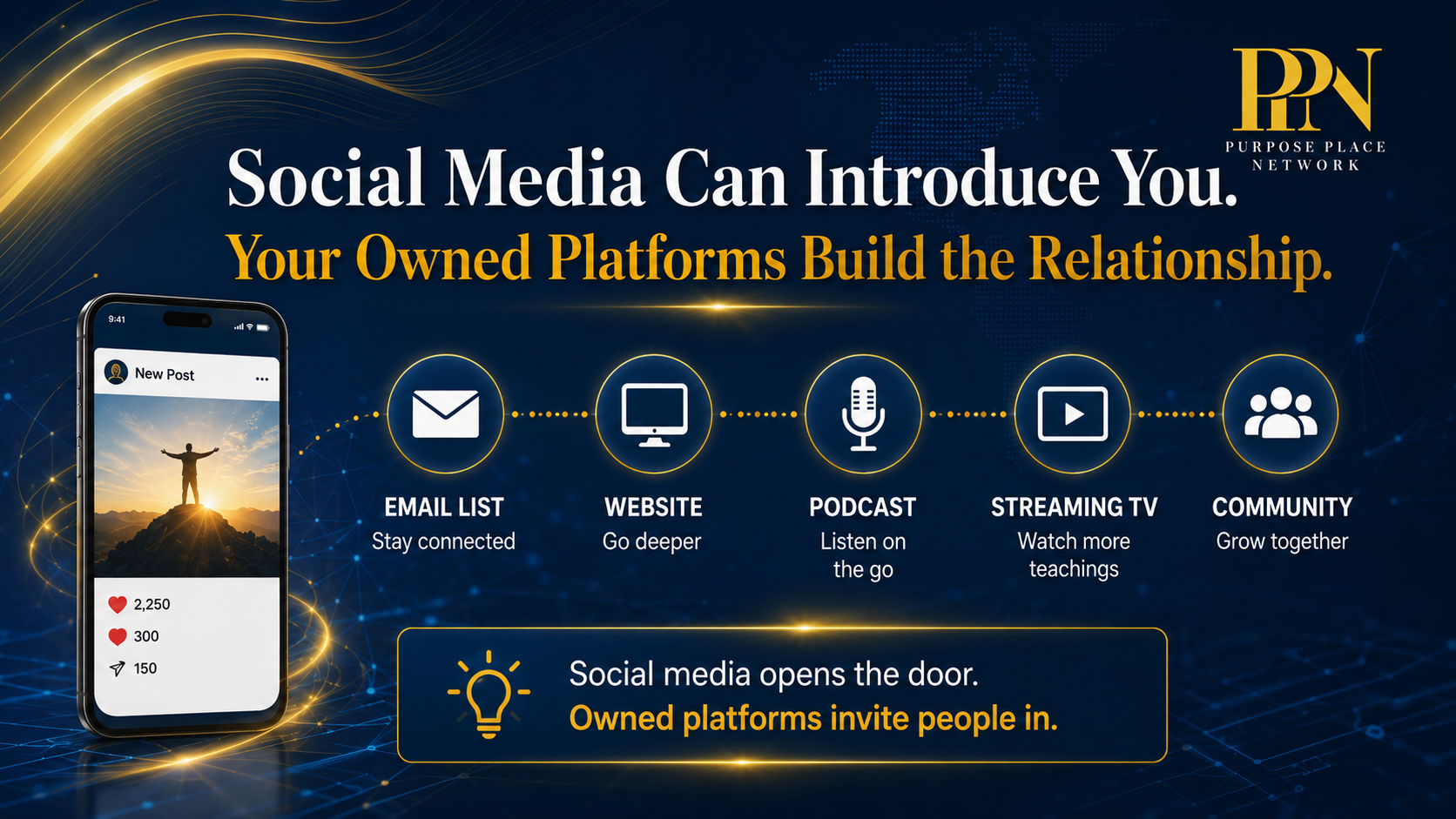
Every social media platform should help lead people somewhere deeper.
A short video can lead to a full episode.
A livestream can lead to a replay library.
A caption can lead to a blog post.
A quote graphic can lead to an email list.
A podcast clip can lead to a streaming TV show.
A guest interview can lead to a community or offer.
An event post can lead to a registration page.
A testimony can lead to a consultation or application.
That is strategy.
Social media creates awareness.
Owned platforms create relationship.
Both matter, but they should not carry the same weight.
Purpose Place Network Helps Creators Think Bigger
Purpose Place Network exists because Christian creators and ministries need more than scattered content.
They need media infrastructure.
They need places where their message can live, grow, and be distributed beyond the limitations of one social platform.
They need to understand how podcasting, streaming TV, digital content, blogs, livestreams, email, and audience building work together.
The future of Kingdom media will require creators who think beyond followers.
Followers are valuable, but they are only one layer.
The deeper work is building an audience you can serve, teach, nurture, and grow with over time.
Purpose Place Network helps Christian creators, ministries, podcast hosts, streaming TV hosts, speakers, authors, coaches, and faith-based entrepreneurs build with more clarity, strategy, and purpose.
Because your message deserves more than occasional visibility.
It deserves structure.
It deserves stewardship.
It deserves a strategy.
Build Beyond the Scroll
Social media moves quickly.
A post can be visible today and forgotten tomorrow.
But your message should not disappear that easily.
If God has given you a voice, a testimony, a teaching, a ministry, a business, or a creative assignment, you need a media strategy that honors the weight of that message.
Do not build only for the scroll.
Build for stewardship.
Build for trust.
Build for ownership.
Build for longevity.
Build for Kingdom impact.
Ready to Build an Owned Audience Strategy?
If you are ready to move beyond social media activity and begin building a stronger owned audience strategy, Purpose Place Network can help you develop the media infrastructure your message deserves.
Download the free Christian Creator Guide from Purpose Place Network and learn how to begin building beyond the algorithm through your website, podcast, email list, streaming platform, and digital media strategy.
If you are ready for deeper support, apply to work with Purpose Place Network and begin creating a strategy that helps your message reach, serve, and grow with the people you are called to impact.
Your followers may find you on social media.
But your owned audience can grow with you for years to come.
Frequently Asked Questions
What is an owned audience?
An owned audience is an audience you can reach more directly because the relationship is not completely controlled by a third-party social media platform. Examples include an email list, website audience, podcast subscribers, customer list, ministry database, private community, membership platform, or streaming TV audience.
Why are social media followers not enough?
Social media followers are not enough because platforms control the algorithm, reach, visibility, and rules. A follower may not see your future posts. An owned audience gives you a stronger way to nurture people over time and build deeper trust.
Should Christian creators still use social media?
Yes. Christian creators should still use social media as a tool for awareness, discovery, and engagement. However, social media should lead people to owned platforms such as a website, email list, podcast, streaming TV channel, community, or digital offer.
What is the best owned audience channel to start with?
For many Christian creators and ministries, the best place to start is an email list connected to a clear website. This gives you a direct communication channel and a digital home base where people can learn more about your message, services, events, resources, and next steps.
How can a ministry build an owned audience?
A ministry can build an owned audience by creating clear next steps from every piece of content. Sermon clips, livestreams, blog posts, and social media updates can lead people to an email list, website, prayer form, event registration page, podcast, streaming TV channel, giving page, or discipleship community.
How can Purpose Place Network help Christian creators build beyond social media?
Purpose Place Network helps Christian creators, ministries, podcast hosts, streaming TV hosts, speakers, authors, coaches, and faith-based entrepreneurs develop media strategy, digital content systems, podcasting opportunities, streaming TV visibility, and owned audience pathways that support long-term Kingdom impact.
